
"coffee plant climate"
10000 article(s) found

A brief introduction to the planting of fine coffee beans in Berman Manor, geographical location, climate and altitude
Kenya is divided into seven provinces (PROVINCE) and one provincial special district (Nairobi province). The following provinces are divided into districts (DISTRICT), townships (DIVISION) and villages (LOCATION). Under the new constitution, the four-tier administrative structure will be changed to the central and county (COUNTY) levels. The 47 counties established under the new constitution will be officially operational after the 2013 general election. The seven provinces are: central Kenya

Introduction to the manor of Guatemala single bean flavor description variety planting development history of production area treatment method
For professional baristas, please follow the Coffee Workshop (Wechat official account cafe_style). Melon is a nickname for Guatemala. The Mayan town sits on top of 37 volcanoes, two of which erupted in 2010. Coupled with frequent tornadoes and natural disasters everywhere, it is a truly dangerous place. But fertile volcanoes

Introduction to the planting Environment of Coffee Flavor varieties in Santa Rita Manor, Colombia
Colombia's mild climate, humid air, and diverse climate make it a harvest season all year round, with different kinds of coffee ripening at different times. What they grow is Arabica coffee beans of unique quality, and the coffee made from this coffee bean has a rich taste and endless aftertaste, which can be called fine coffee. Nowadays, many people combine Colombian coffee with high quality and delicious coffee.

A brief introduction to the planting situation of washed Yejia Xuefei G1 coffee beans, geographical location, climate and altitude
The so-called Yejiachefi flavor refers to the strong aroma of jasmine, lemon or lime acid, as well as peach, almond sweet or tea aroma. The phrase "coffee entrance and flowers in full bloom" is best described, just as flowers promote the comfort of taste buds and olfactory cells in the nasal cavity. In addition to the fragrance of flowers, the delicate thickness of body, like silk massage in the mouth, feels wonderful Yega Xuefei according to coffee raw beans.

Cultivation of Katim boutique coffee beans planted at low altitude A brief introduction to the geographical location, climate and altitude
As for quality. I personally suggest that you can try it. Generally speaking, except Tiebika is a little more expensive, Katim can be said to be the price of cabbage. Tiebika medium roast taste individual coffee and then believe that you have your own comments, if you like the blue mountain flavor, I think I should like Yunnan Tibika. The taste is lighter and the aftertaste is long and fruity. But the first bite might.

Colombia coffee estate with rich flavor
Colombia, beautiful mountains and rivers, beautiful scenery, pleasant climate, four seasons such as spring, fresh air, Qinren heart. Colombia's mild climate, humid air and diverse climate make it a harvest season all year round, with different types of coffee maturing at different times. What they grow is the unique quality of Arabica coffee beans, and coffee made from these beans tastes strong.

Katim Fine Coffee Bean Varieties Planting Location Climate Elevation Profile
1. The state-owned Lujiang Farm in Baoshan City was planted in March 1991 with an area of 12.6 mu. There was no shade and irrigation once in dry season. The management level and fertilizer application level were medium. The fruit was produced in 1993. The average yield per mu in 93/94 was 75 kg. The average yield per mu in 94/95 was 350 kg. The average yield per mu in 95/96 was 225 kg. The average yield per mu in three years was 217 kg. The yield was 36% higher than that of Tibika and Bobang (Tibika and Bobang

Climate change affects coffee production. 25 million coffee farmers' livelihoods are threatened.
A coffee farmer in the Mexican state of Chiapas recently talked about drastic climate change in an interview with Alicia Frank, a researcher at the University of California. In the past, there was usually only mild drizzle, but now there are frequent torrential rains, causing coffee trees to flood. These problems are by no means confined to Mexico. In South America, Asia and Africa, droughts and storms caused by global warming
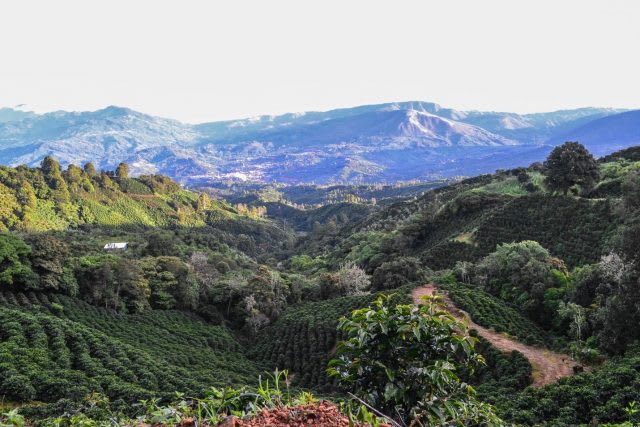
What are the local conditions? What is the effect of local conditions on the flavor of coffee?
Professional coffee knowledge exchange more coffee bean information please follow the coffee workshop (Wechat official account cafe_style) What Is Terroir and How Does It Affect Your Coffee We often hear the word "local conditions" when talking about coffee, but what exactly does "local" mean? Does it have anything to do with the flavor of coffee? Why do we need to care about the local environment? Author mining

Climatic characteristics and brief introduction of coffee beans in El Salvador
Follow Ka Pai (Wechat official account vdailycom) found that the beautiful cafe opened a small shop of its own climate features savanna climate. The plain area belongs to the tropical rain forest climate and the mountain area belongs to the subtropical forest climate. The average annual temperature is 25-28 ℃. The annual precipitation is more than 1800 mm in mountain areas and about 1000 mm in coastal areas. The rainy season is from May to October. Don't underestimate Salvadoran coffee
A brief introduction to the cultivation of high-quality boutique coffee beans in Santa Rita Manor, geographical location, climate and altitude
Growing coffee also requires daylight and proper shade, which is most suitable for planting on fertile soil or volcanic ash soil. Therefore, the origin of coffee is widely distributed in South America, Central America, the West Indies, Asia, Africa, Arabia, the South Pacific and Oceania. Such as Ethiopia and Tanzania in Africa, Brazil, Colombia, Jamaica, Guatemala and Mexico in Central and South America.

Guatemala Picotenango Highland Coffee Production Area with Dry Climate but Abundant Water
Vivit South Fruit Production Area is located in the northwest highlands of Guatemala. It is planted at an altitude of 1800-2100 meters. It is the highest coffee production area in the country and is famous for producing excellent quality beans. Due to the large number of rivers and lakes in Guatemala, the Vivitenango region is rich in mountains and water resources, the climate is dry but the water supply is abundant, and the water conservancy facilities in the region are complete, so coffee is mostly washed and added.

Introduction of Coco Coffee planting Environment and Climate producing area in Hawaii
Following Cafe (Wechat official account vdailycom) found that Hawaii is the only state in the United States that grows coffee, which is grown in the five main islands of Hawaii: Oahu, Hawaii, Maui, Kauai and Moroca. The coffee produced in different islands also has its own characteristics, and the coffee in Kauai is soft.

Rich and mellow lemon tree manor boutique coffee bean planting geographical location climate altitude brief introduction
Nicaragua is located in central Central America, bordered by the Pacific Ocean to the west and the Caribbean Sea to the east. The highlands in the north and the coastal plains in the east are part of the Central American volcanic belt. The eastern plain is high-temperature and rainy, with a tropical maritime climate. The suitable climate provides an excellent growth environment for the cultivation of coffee. High-quality Nicaraguan coffee, grown in the north and middle of the country. Coffee is Ni.

Fragrant and mellow lemon tree manor boutique coffee bean planting geographical location climate altitude brief introduction
Nicaragua is located in central Central America, bordered by the Pacific Ocean to the west and the Caribbean Sea to the east. The highlands in the north and the coastal plains in the east are part of the Central American volcanic belt. The eastern plain is high-temperature and rainy, with a tropical maritime climate. The suitable climate provides an excellent growth environment for the cultivation of coffee. High-quality Nicaraguan coffee, grown in the north and middle of the country. Coffee is Ni.

A brief introduction to the planting situation, geographical location, climate and altitude of red-top coffee iron card fine coffee beans
Yunnan small grain coffee is a 34-year-old fruiting tree. Coffee is a short-day plant. Coffee has the characteristics of multiple flowering and concentrated florescence. The florescence of small seed coffee in Yunnan is 27 months, and the flowering period is 35 months. The flowering of coffee is greatly affected by climate, especially rainfall and temperature. Coffee flowers have a short life span of only 23 days. Small seed coffee usually opens at 35: 00 in the morning and blooms at 57: 00

Introduction to the planting Environment of Hope Manor Coffee varieties in Columbia Coffee producing area with pleasant Climate
In his letter from Jamaica in 1815, Bolivar envisioned that when South America was liberated from Spanish colonial rule, New Granada and Venezuela should form a country, named Colombia. In August 1819, Bolivar's Patriotic Army defeated the Spanish colonial army at the Battle of Boyaca and liberated Bogota. So, New Granada and Venezuela

A brief introduction to the cultivation of pure and gentle Santo Domingo boutique coffee beans, geographical location, climate and altitude
To trace the origin of Tibica, we should first talk about the coffee trees originally planted in Martinique. These trees were planted by Dominicans as far back as the early 18th century, so Dominica began growing coffee as early as that time. For a time, the Caribbean was almost synonymous with coffee production, but in recent years Cuba, Haiti and other producing areas have been severely damaged by Hurricane George.

A brief introduction to the cultivation of exquisite boutique coffee in Columbia, geographical location, climate and altitude
And the annual rainfall in Nalinglong province shows a peak distribution, with a rainy season, which lasts from October of that year to May of the following year, and the dry season lasts for June, July and August. However, even in dry months, coffee farmers will not worry too much, because the warm current caused by trade winds from the southern continent will produce enough water vapor when they meet with a cool night, just to replenish the coffee trees with water.